
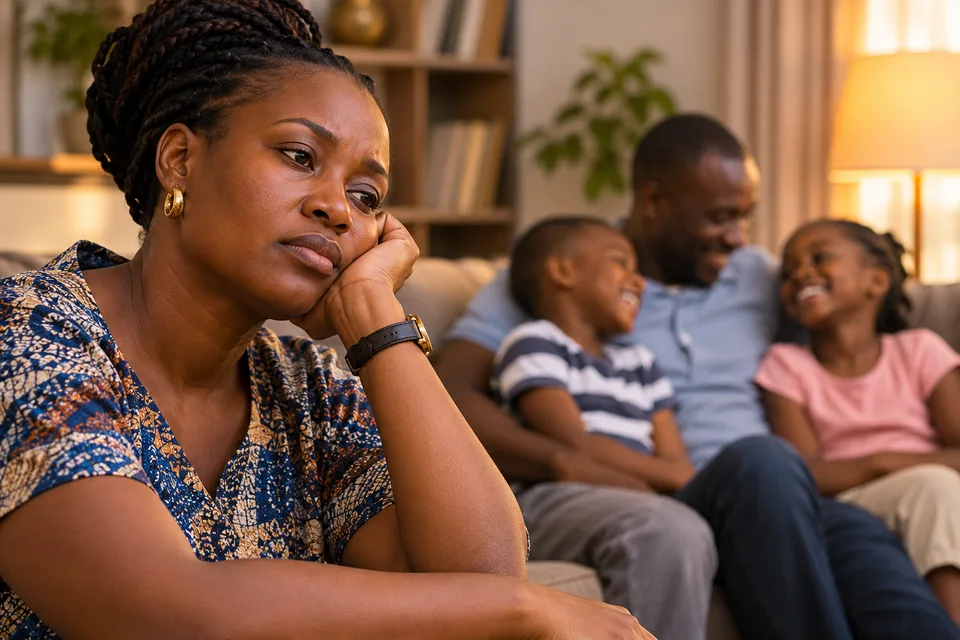
When keeping a family together comes at the expense of a woman's emotional well-being.
By Jackline Mutimba #SolRise
At the family gathering, they look like the perfect couple. They arrive together, exchange greetings, laugh with friends and pose for photographs. Someone compliments the woman on how well she has maintained her marriage.
"You are lucky. You have a good husband."
She smiles and says thank you.
What nobody knows is that they barely spoke on the way to the function. What nobody sees are the nights she has gone to bed with questions she cannot ask, feelings she cannot express and disappointments she has learned to swallow.
By the time they return home, the smiles have disappeared.
Tomorrow, life will continue as usual.
She will wake up, prepare the children, go to work, attend to family responsibilities and answer the familiar question about how things are at home.
"Everything is fine," she will say.
But is it? For many women, marriage is more than a relationship between two people. It carries the expectations of families, communities, religious institutions and society.
A woman is often reminded to protect her home, respect her husband, exercise patience and avoid discussing family matters with outsiders.
Some of this advice comes from a genuine desire to preserve relationships. But when patience becomes an expectation to tolerate persistent emotional pain, something important gets lost.
The woman's well-being.
Consider the woman who has stopped expressing her feelings because every difficult conversation ends in an argument.
Or the woman who carefully chooses her words to avoid upsetting her partner.
There is also the woman whose emotional needs have been ignored for so long that she no longer expects anyone to notice when she is unhappy. There may be no dramatic confrontation or visible evidence that something is wrong.
Yet she feels increasingly alone in a relationship that was supposed to offer companionship. A woman can share a home, raise children and attend social functions with her partner while feeling emotionally disconnected from him.
Emotional loneliness within marriage is not always the result of deliberate cruelty. Sometimes, couples gradually stop communicating meaningfully. Financial pressures, parenting responsibilities, unresolved disagreements and competing priorities can create distance.
However, persistent humiliation, intimidation, controlling behaviour, or fear are more serious warning signs. They should never be dismissed as ordinary marital challenges. Unfortunately, women who speak about difficulties in their marriages are sometimes met with questions that place the responsibility entirely on them.
"Have you tried being more patient?"
"What about the children?"
"Do you know how many women wish they were married?"
Such responses can discourage women from seeking understanding and support.
And so, some choose silence.
Not because they are comfortable, but because speaking openly may expose them to judgment, gossip, financial uncertainty or pressure from relatives.
Every relationship has challenges, and disagreements do not automatically make a marriage unhealthy. What matters is whether both partners can communicate respectfully, acknowledge problems and work toward resolving them.
A healthy marriage should allow disagreement without fear, vulnerability without humiliation and honest conversations without punishment.
Prolonged relationship distress can affect sleep, concentration, self-esteem and emotional well-being. It may also contribute to anxiety or depression.
This is why conversations about women's mental health must include the quality of their intimate relationships.
For Rotary, an organisation built on service, friendship and ethical leadership, this conversation offers an opportunity to reflect on how we support healthy families. We can challenge attitudes that normalise emotional suffering, encourage compassionate listening and promote access to appropriate professional support.
Where abuse or intimidation is present, safety must take priority over pressure to reconcile or preserve appearances.
Marriage can be a beautiful source of companionship, security and shared purpose. Many couples build relationships in which both partners feel loved, respected and supported. That is precisely why emotional well-being should matter within marriage.
A successful relationship should not be measured only by how long two people have stayed together, how beautiful their photographs look or how others perceive their family.
It should also be reflected in how they communicate, treat each other during difficult moments and make one another feel valued.
Sometimes, the question is not whether a woman has managed to keep her marriage together, but whether she has been able to remain emotionally well within it.
As we celebrate strong families and lasting relationships, perhaps we should remember that a marriage can look beautiful to the world while one person quietly struggles inside it.
And perhaps the most important question is not simply, "Are you still together?"
It is: "Are you both happy, respected and emotionally safe in the relationship you are building?"